

 en
 English
 Español

Manual Valve Operating Mechanism
-- Steady & Reliable Manufacturer --
Brief Product Description
A manual valve operating mechanism lets a person open, close or position a valve without external power. It can be as simple as a lever handle or as complete as a handwheel with a worm gear reducer, position indicator and lock. Valve makers, pipeline contractors, distributors and plant maintenance teams buy these mechanisms for sites where reliability matters more than automation.
Buyers weigh required operating force, gear ratio, rotation angle, handle length, mounting pad, stem drive size and locking options. Environmental sealing, coating and visible position indication are equally important for outdoor or washdown use.
We cast, machine, finish and assemble the mechanisms in our own facility. Standard models can be supplied from stock tooling, and OEM or ODM customization covers ratios, drive sizes, color and marking. Samples are normally ready in 10 to 25 days, and MOQ commonly starts at 100 to 300 units per model.
Mechanisms are assembled, greased and checked for smooth rotation before shipment, and the stops and indicator are pre-set to the standard position. Cartons are labeled by model and ratio for simple warehouse handling.
Mechanism Types
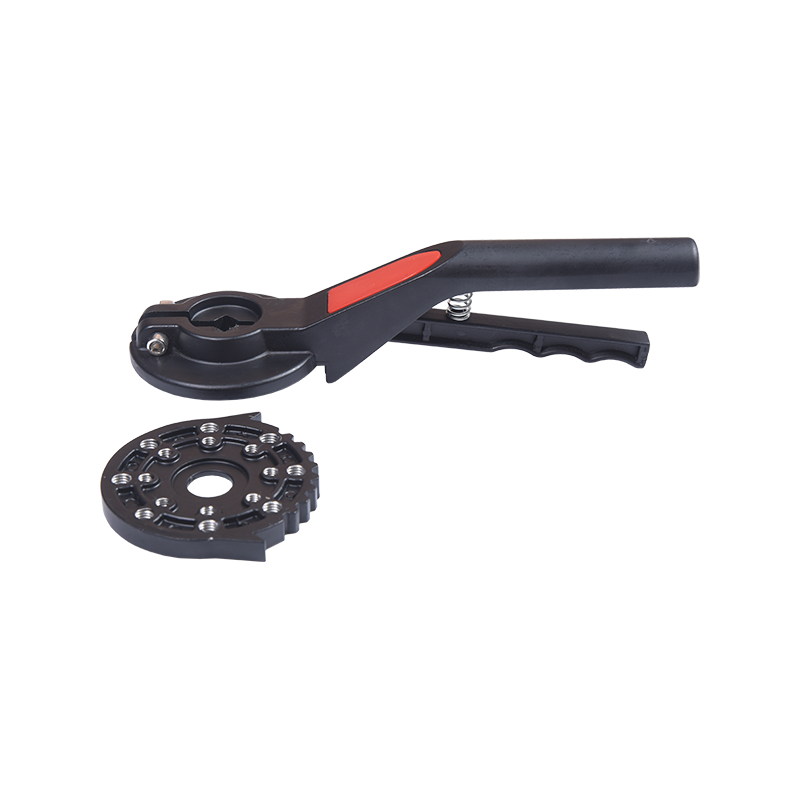
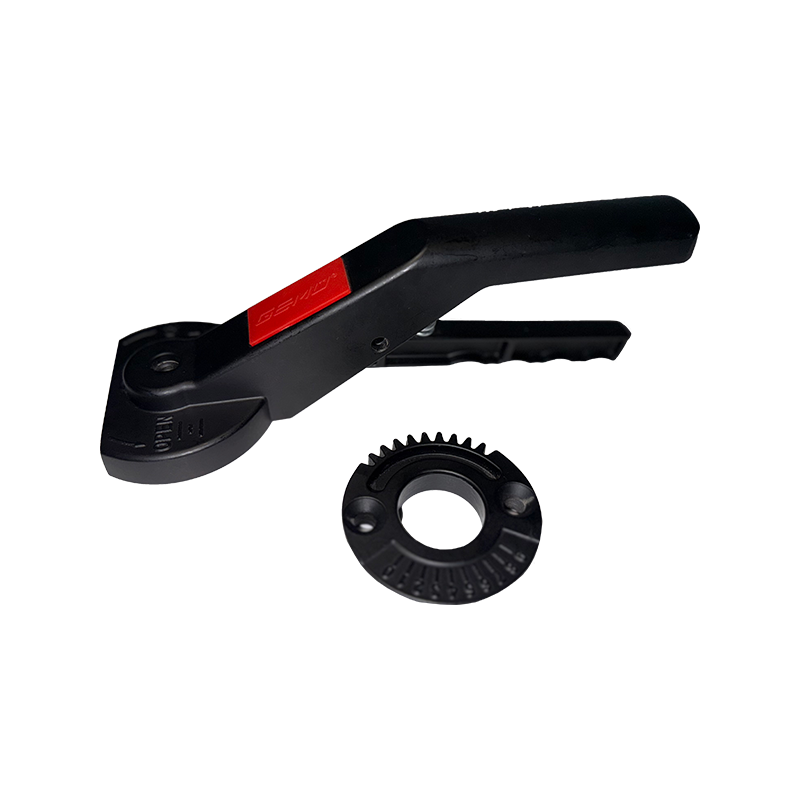
Lever handle, handwheel, worm gear gearbox
Rotation
90 degrees, adjustable stops
Mounting
ISO 5211 F03 to F25
Safety
Padlock plate, self-locking gear, position indicator
Material
Aluminum alloy housing, steel internals
Service
OEM and ODM, samples, MOQ from 100 units
Product Overview
A manual valve operating mechanism is the set of handle, gear and housing parts that transforms human effort into valve motion. For small valves a lever is enough. For larger valves a gear reducer multiplies force so one person can operate the valve with an acceptable handwheel effort.
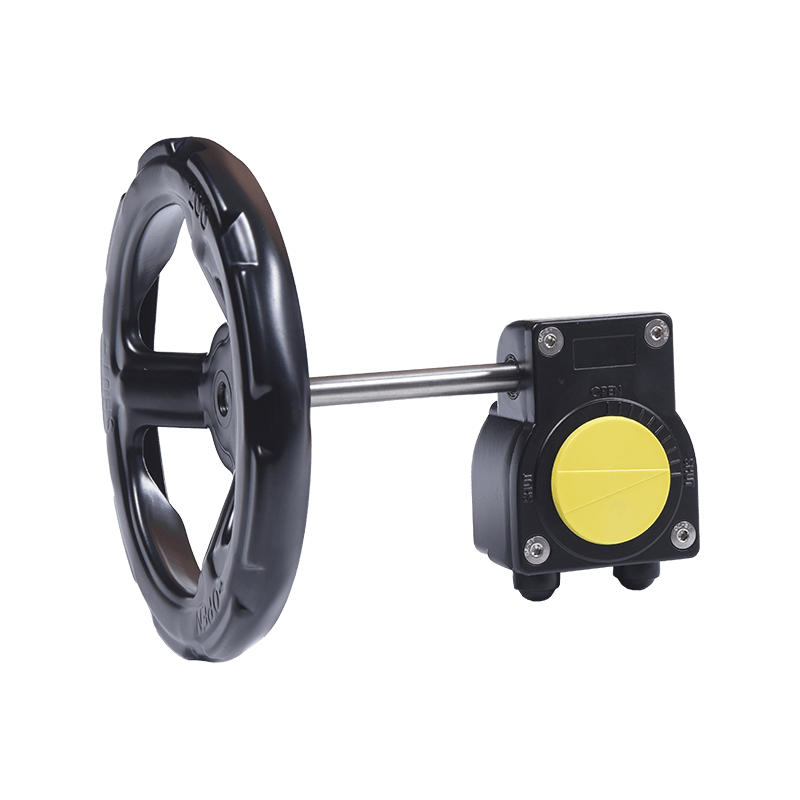
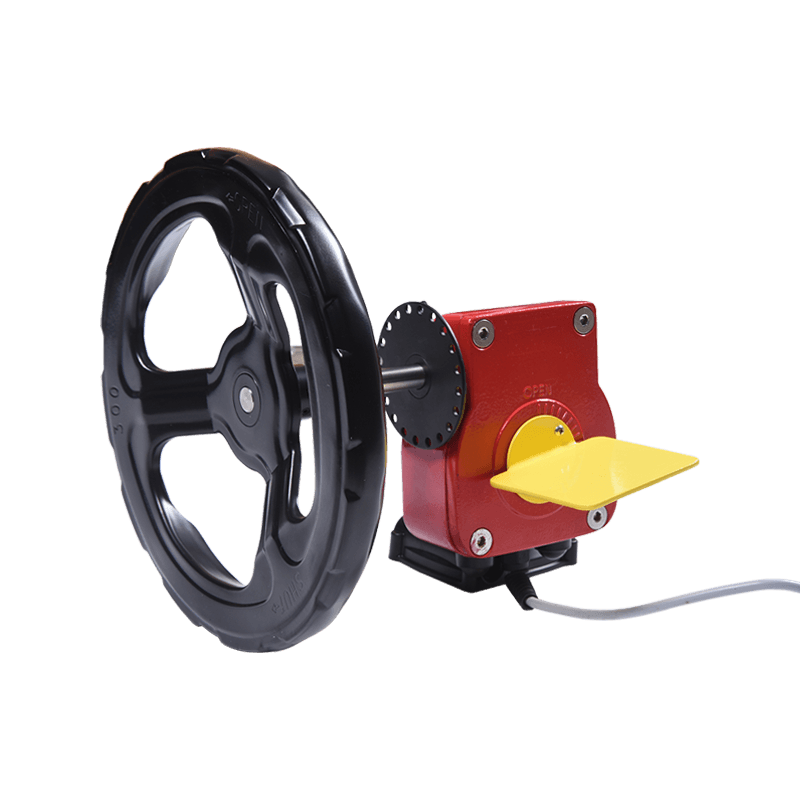
In gearbox designs, the handwheel turns a worm that drives a worm wheel connected to the stem drive. Adjustable stops define fully open and fully closed positions, and a top-mounted indicator shows valve status. Because the mechanism is purely mechanical, it continues to work in power loss and can double as a manual override beside an actuator.
Operation
Manual, power-free
Rotation
90 degrees
Mounting
ISO 5211
Housing
Aluminum alloy
Main points for buyers
- Operating effort: Check handwheel force against the valve torque and the gear ratio.
- Position indication: Choose a clear indicator that is visible from the walkway.
- Lock and stop: Ask for padlock options and adjustable travel stops.
- Stem drive: Confirm the stem shape, size and keyway.
- Environment: Match coating and sealing to outdoor, marine or washdown conditions.
Manual mechanisms are priced by type, torque capacity, gear material, housing size, coating, accessories such as locks and extensions, and order volume. Special ratios and bore sizes need setup time and may change MOQ. Compare quotations on the same torque, lubrication specification and finish, and ask whether the handwheel and fasteners are included.
Specification
| Parameter | Specification |
| Mechanism Type | Lever handle, handwheel gearbox, worm gear operator |
| Rotation Angle | 90 degrees, adjustable stops |
| Output Torque | Up to 2,000 N.m depending on model |
| Gear Ratio | 20:1 to 80:1 for gearbox types |
| Mounting Flange | ISO 5211 F03 to F25 |
| Stem Drive | Square, double-D or keyed |
| Housing Material | Aluminum alloy |
| Locking | Padlock plate or lockable lever on request |
| Position Indicator | Mechanical, top mounted |
| Operating Temperature | -20 to +80 degrees C, standard |
| Surface Treatment | Powder coating, painting, anodizing |
| Customization | Ratio, bore, color, logo |
Application
Application Scenarios
| Industry | Typical Use | Key Requirement |
| Water supply | Valve chambers and pumping stations | Self-locking and easy maintenance |
| Oil and gas | Block valves on manifolds | Corrosion resistant, lockable design |
| Industrial plants | Utility lines for air, steam and water | Durable under frequent use |
| Marine | Deck and ballast systems | Salt-air coating |
| Fire protection | Isolation valves on sprinkler mains | Clear position indication |
Target Customers
Valve Manufacturers
Need handles and gearboxes in sizes matching their ranges.
Pipeline Contractors
Need robust manual devices for remote or unpowered sites.
Maintenance Departments
Need replacements that fit existing valves.
Suitable and Unsuitable Uses
Suitable Uses
- Valves that must be operated without power
- Manual override on automated valves
- Sites that require visible, lockable position
- Routine isolation tasks
Unsuitable Uses
- High-cycle automatic control
- Valves in locations that are physically unreachable
- Torque beyond handwheel limits
- Applications that need remote operation
Selection Guidance
Usage Notes
- Mount the mechanism with valve and indicator in the same position.
- Set stops carefully after installing.
- Do not use extension pipes on levers.
- Keep handwheels and indicators clean and visible.
- Lubricate according to the maintenance plan.
Advantages
Works without power
Pure mechanical design means no electricity or air supply is needed. Operators can run the valve during outages, which improves site safety.
Self-locking gearboxes
Worm gear sets hold position under load at standard ratios. Valves do not drift, so extra brakes are unnecessary.
Consistent castings
Gravity cast A356 housings pass through heat treatment and CNC machining in our plant. Uniform parts mean fewer assembly problems on your side.
Clear indication and lock
Indicators and padlock plates are built into the design. These features support site lockout procedures and reduce operator error.
Customizable
Ratios, bores, colors and marking are set under OEM terms. You can build a branded range without separate development.
Fast sampling
Existing tooling allows sample delivery in about 10 to 25 days. Quicker validation shortens your launch schedule.
Frequently Asked Questions
- Q: What is the difference between a lever handle and a gearbox?
- A: A lever gives direct force and suits small valves. A gearbox multiplies force through a worm and wheel for larger valves.
- Q: Can the mechanism be locked?
- A: Yes. Padlock plates and lockable lever designs are available on request.
- Q: What is the maximum torque?
- A: Gearbox models reach up to about 2,000 N.m. Higher values are reviewed case by case.
- Q: Will the valve hold position?
- A: At standard ratios the worm gear is self-locking, so load on the valve does not turn the handwheel.
- Q: Can it be used as a manual override?
- A: Yes. It can be fitted beside a pneumatic actuator where the design allows, subject to the valve and actuator arrangement.
- Q: What is the MOQ?
- A: MOQ usually starts at 100 to 300 units per model. Samples can be arranged first.
- Q: What flange sizes are available?
- A: ISO 5211 pads from F03 to F25 are machined according to the model and your valve data.
- Q: Can you provide private-label products?
- A: Yes. Logo, color and packaging can be customized under OEM terms.
Contact us to learn more
Tell us your drawing, sample or application for manual valve operating mechanism, together with material, finish and expected annual quantity. Our engineers will review the details and reply with a clear quotation, sampling plan and lead time.
Send Your Inquiry