

 en
en
 English
 Español
A process engineer at a chemical plant is reviewing an actuator datasheet for a new butterfly valve line. The line pressure is high, and the customer needs the valve to close automatically if the plant air supply fails. The spec sheet shows two options: single acting and double acting. Choosing the wrong one means a failed shutdown, a damaged gearbox, or a costly retrofit. In practice, the core difference is simple: a single acting actuator uses spring force to return to its safety position when air is lost; a double acting actuator needs air pressure to move in both directions and holds its last position if the air supply drops. Once you understand that behavior, selection becomes a matter of matching fail-safe requirements, cycle frequency, and budget.
Content
- 1 The Core Difference: How Single and Double Acting Actuators Work
- 2 Anatomy of Single Acting and Double Acting Actuators
- 3 What Is a Single Acting Pneumatic Actuator?
- 4 What Is a Double Acting Pneumatic Actuator?
- 5 Side-by-Side Comparison: Single Acting vs Double Acting
- 6 Torque and Control: Why the Difference Matters
- 7 Where to Use Each Type: Application Scenarios
- 8 Selecting the Right Actuator for Your Valve Automation Project
- 9 Frequently Asked Questions
- 9.1 Q1: What is the difference between single acting and double acting?
- 9.2 Q2: Which actuator is better for fail-safe?
- 9.3 Q3: Can a double acting actuator be made fail-safe?
- 9.4 Q4: What does "air to open" mean?
- 9.5 Q5: How do I calculate actuator torque?
- 9.6 Q6: Are single acting actuators cheaper than double acting?
The Core Difference: How Single and Double Acting Actuators Work
A single acting pneumatic actuator has one air port. Pressurized air enters the port and pushes a piston, compressing an internal spring. When the air is vented, the spring pushes the piston back. This means the actuator produces torque in one direction with air and in the opposite direction with spring force.
A double acting pneumatic actuator has two air ports. Air is applied to one port to drive the piston in one direction; air is applied to the other port to drive it back. There is no spring that stores energy, so the actuator can produce power in both directions but depends on a continuous and clean air supply for every stroke.
The practical consequence is that a double acting actuator gives more control over valve position and more consistent output torque across the full stroke. A single acting actuator has a safety advantage: when the air source fails, the spring returns the valve to a defined fail-safe state. This is why single acting actuators are common on emergency shutdown valves, while double acting actuators are common on modulating valves and automated process lines.
Anatomy of Single Acting and Double Acting Actuators
The mechanical difference is easier to see in a cutaway view. The isometric illustration below shows a typical single acting spring-return actuator. The spring sits behind the piston; the air port is on the opposite side. When air enters, it compresses the spring. When air is exhausted, the spring extends and returns the valve.
In a double acting actuator, the spring cavity would be an additional pressurized chamber. The absence of a spring means the body can be slightly shorter for the same output, but the actuator cannot return by itself after a pressure loss.
What Is a Single Acting Pneumatic Actuator?
Single acting actuators come in two main variants: spring-return and external-spring. The most common in valve automation is spring-return, where the spring is inside the actuator body. The design is compact, with a single air connection and one moving assembly.
When choosing a single acting actuator, the spring torque is not constant. As the piston compresses the spring, the force increases. For a quarter-turn valve, this means the actuator provides less torque at the start of the stroke than at the end. The effective torque curve is sloping, and the spring rate must be sized to overcome the valve's breakaway torque and the fluid pressure load.
Typical applications for single acting actuators include:
- Emergency shutdown valves in oil, gas, and chemical plants
- Vent valves that must open or close on loss of instrument air
- Safety interlocks on burner management systems
- Low-cycle manual/automated isolation valves
What Is a Double Acting Pneumatic Actuator?
A double acting actuator does not rely on a spring for return movement. Both the open and close strokes are powered by compressed air. This gives it symmetric torque characteristics and a higher overall torque density than a single acting actuator of the same body size, because no space is reserved for a spring.
Double acting actuators are the standard choice for high-frequency modulating service, where precise positioning and fast cycling are required. They can be paired with solenoid valves, positioners, and limit switches for automated control loops.
However, one purchasing risk must be considered: if the air supply fails, a double acting actuator does not automatically move to a safe position. It may stay in the current position, which is unsafe for some processes. If the process requires a fail-safe action, an external spring or a safety device—such as a declutch gearbox with a spring-return unit—must be added. This is why a simple “double acting is stronger than single acting” comparison can be misleading.
Side-by-Side Comparison: Single Acting vs Double Acting
The table below summarizes the practical differences that affect procurement and maintenance.
| Criteria | Single Acting | Double Acting |
|---|---|---|
| Air ports | One | Two |
| Fail-safe behavior | Spring returns to preset position | Stays in last position; needs external safety |
| Torque profile | Sloping, lower at start | Symmetric, more consistent |
| Control types | ON/OFF, basic | ON/OFF, modulating, positioning |
| Cycle frequency | Low to medium | High |
| Relative cost | Lower initial cost | Higher initial cost |
| Maintenance | Spring replacement over time | Seal and lubrication wear |
A double acting unit delivers more consistent torque and is easier to control for modulating service. For part-turn valves in industrial pipelines, a built-to-last actuator body with a precise bore and sealed housing reduces maintenance surprise. Our actuator range is manufactured with that requirement in mind.
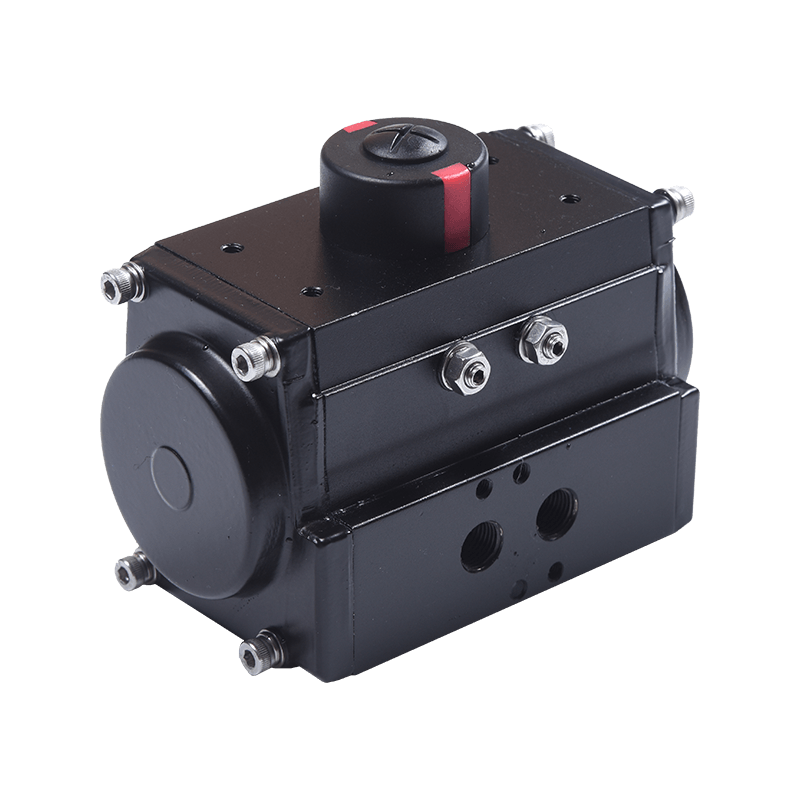 Dual Rack and Pinion Pneumatic Actuator with Corrosion ProtectionThis actuator features an extruded aluminum body with honed bore and dual pistons for consistent torque. It suits part-turn valves needing precise control and low maintenance in industrial pipelines.View Product →
Torque and Control: Why the Difference Matters
Look at the torque output along the stroke. A double acting actuator delivers a nearly flat torque curve because air pressure acts on the same effective area in both directions. A single acting actuator starts with less torque and builds as the spring is compressed. This slope is critical when the valve needs a high breakaway torque at 0° and then has low seating torque at 90°.
The torque slope also affects the sizing calculation. If you evaluate a double acting actuator for a spring-return service, the usable torque at the beginning of the stroke may be insufficient, even though the average torque looks fine. Always size the actuator using the lowest effective torque point.
When the required output torque is beyond what a standard actuator body can provide, a manual gear reducer can multiply torque to the valve shaft. This is common in large-diameter butterfly valves and in retrofit projects where the air pressure is limited.
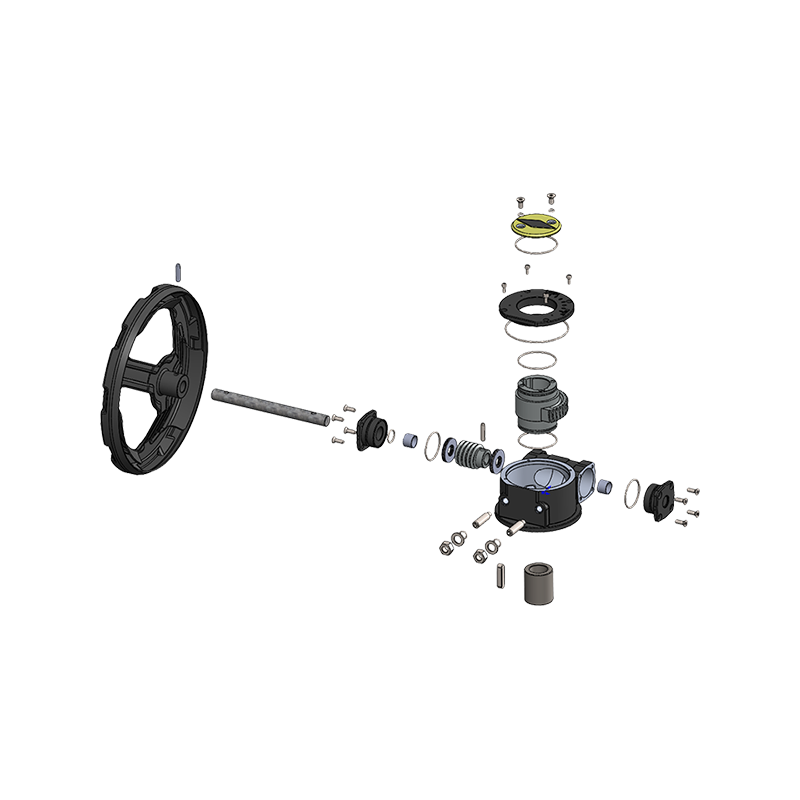 CF Series Manual Gear Reducer for Quarter-Turn ValvesDesigned for larger valves and retrofit projects, this gearbox multiplies torque when air pressure is limited. Its corrosion-resistant coating fits harsh environments like coastal or marine piping.View Product →
Where to Use Each Type: Application Scenarios
The suitability of each actuator type depends on the process safety requirement and the duty cycle. The chart below maps typical requirements to a 1–5 suitability score (higher is better).
In practice, the process safety requirement dominates the decision. If a loss of air must create a safe condition, single acting is the default. If the process can tolerate a valve staying in its last position and the cycle count is high, double acting is more efficient. Many plants use a hybrid approach: double acting for normal operation plus a manual override for emergency or maintenance.
For those hybrid systems, a declutch gearbox allows the operator to engage a handwheel and operate the valve manually without cutting off the actuator air supply. This is a practical safety net when the air compressor goes down unexpectedly.
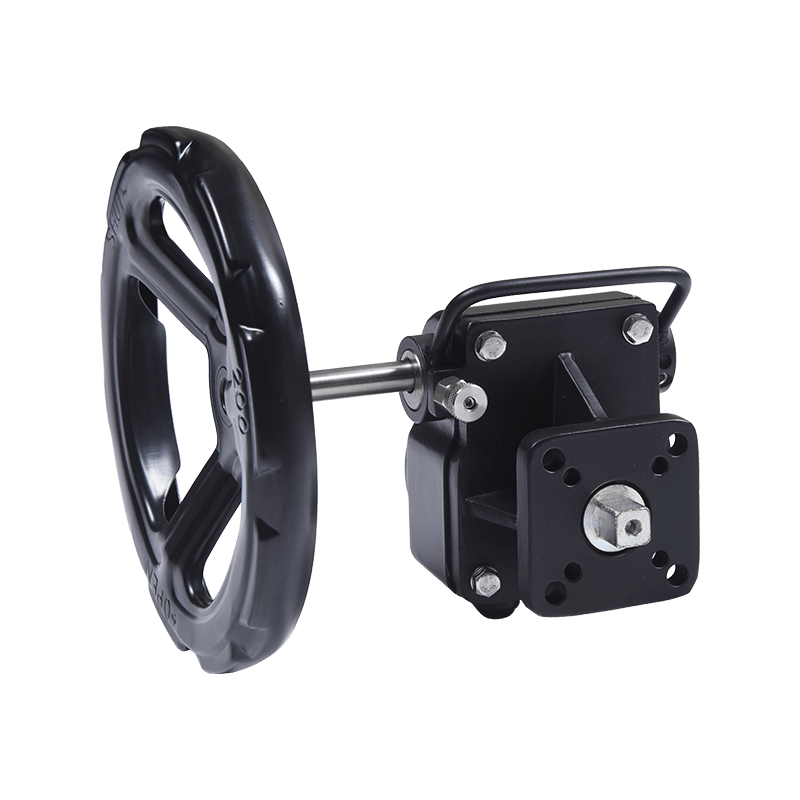 Aluminum Declutch Gearbox for Manual Override of Pneumatic ActuatorsThis declutch unit enables manual operation of butterfly, ball, or plug valves without cutting air supply. It mounts directly to standard rack-and-pinion actuators, providing reliable fallback during power loss or testing.View Product →
Selecting the Right Actuator for Your Valve Automation Project
Start by defining the fail-safe position required by the process. Then map the valve torque at the extreme points of the stroke, including safety margin for packing friction and flow forces. After that, consider the control strategy: simple on/off or modulating with a positioner.
- Determine the required fail action: “air to open” or “air to close.”
- Calculate the maximum valve torque, including breakaway and seating torque.
- Compare the actuator torque at the start of the stroke, not just at mid-stroke.
- Select the air supply pressure and flow rate your compressor can deliver.
- Add a positioner and limit switch if the valve needs remote indication.
- Consider manual override for commissioning, maintenance, and emergency.
Before finalizing the actuator size, review how a quarter-turn gearbox changes the torque path: what is a part-turn gearbox and how does it work. If your process requires a manual override without removing the actuator, a declutch gearbox can be fitted between the actuator and the valve to provide both automatic and hand operation.
Frequently Asked Questions
Q1: What is the difference between single acting and double acting?
Single acting uses one air port and a spring to return. Double acting uses two ports and air-powered movement in both directions.
Q2: Which actuator is better for fail-safe?
Single acting, because it springs to a preset position when air is lost.
Q3: Can a double acting actuator be made fail-safe?
Yes, by adding an external spring return or a safety device with accumulator or manual override.
Q4: What does "air to open" mean?
It means pressurized air opens the valve and spring closes it; venting returns to closed.
Q5: How do I calculate actuator torque?
Multiply valve breakaway torque by a safety factor, then compare it to the actuator torque at the start of the stroke.
Q6: Are single acting actuators cheaper than double acting?
Initial cost is lower, but total cost depends on the spring, maintenance, and the need for external safety hardware.