

 en
en
 English
 Español
A limit switch on a sewage pumping station's valve actuator failed three months after commissioning. The nameplate read IP67, but green corrosion was growing across the terminal block and the micro-switch contacts had welded shut. Water had entered through the cable gland, fitted and undertorqued on site, and been forced through the seal by the first flood of the season.
An IP (Ingress Protection) rating is the international shorthand for how well an enclosure resists solid objects and water. Defined by the IEC 60529 standard, it is an engineering specification rather than a marketing badge. Read correctly, it tells you whether a component can survive dust, rain, washdown or submersion. Read loosely, it turns a data plate into a maintenance ticket.
Content
Anatomy of an IP Code
An IP code begins with the letters IP followed by two digits, with an X allowed in either position when that characteristic is not declared. The first digit, from 0 to 6, rates protection against solid objects and accidental contact. The second digit, from 0 to 8, rates protection against water.
| Digit | Meaning as first digit (solids and contact) | Meaning as second digit (water ingress) |
|---|---|---|
| 0 | No protection | No protection |
| 1 | Objects over 50 mm; back of hand | Vertically dripping water, 10 min |
| 2 | Objects over 12.5 mm; fingers | Dripping water at 15 degree tilt, 10 min |
| 3 | Objects over 2.5 mm; tools and wires | Water spray up to 60 degrees from vertical, min 5 min |
| 4 | Objects over 1 mm; screws | Splashing water from any direction, min 5 min |
| 5 | Dust-protected; limited ingress permitted | Low-pressure jets (6.3 mm nozzle), 12.5 L/min |
| 6 | Dust-tight; no dust ingress in 8-hour test | Strong jets (12.5 mm nozzle), 100 L/min |
| 7 | Not applicable | Temporary immersion, 0.15 to 1 m, 30 min |
| 8 | Not applicable | Continuous immersion, depth and time set by manufacturer |
The duration column is the part most spec sheets leave out. Immersion is the longest standard test because the seal must hold hydrostatic pressure for a full 30 minutes. Jet tests are short but use focused energy.
Why IP Ratings Matter in Valve Automation
In our own manufacturing work, die-cast aluminum housings for valve drives, pneumatic actuators and gearboxes, the IP class is one of the first items a client's engineer verifies. The reason is practical: a valve installation links process flow to control logic. The actuator turns the valve, and the position feedback device tells the controller that the turn happened. If moisture kills that feedback, the plant loses its eyes on the process.
The position feedback element is usually the weakest electrical link in an outdoor assembly because it contains contacts, terminals and wires inside a small housing. A limit switch built to hold its rating through rain, condensation and washdown keeps those terminals dry. That is the logical starting point when specifying outdoor valve feedback.
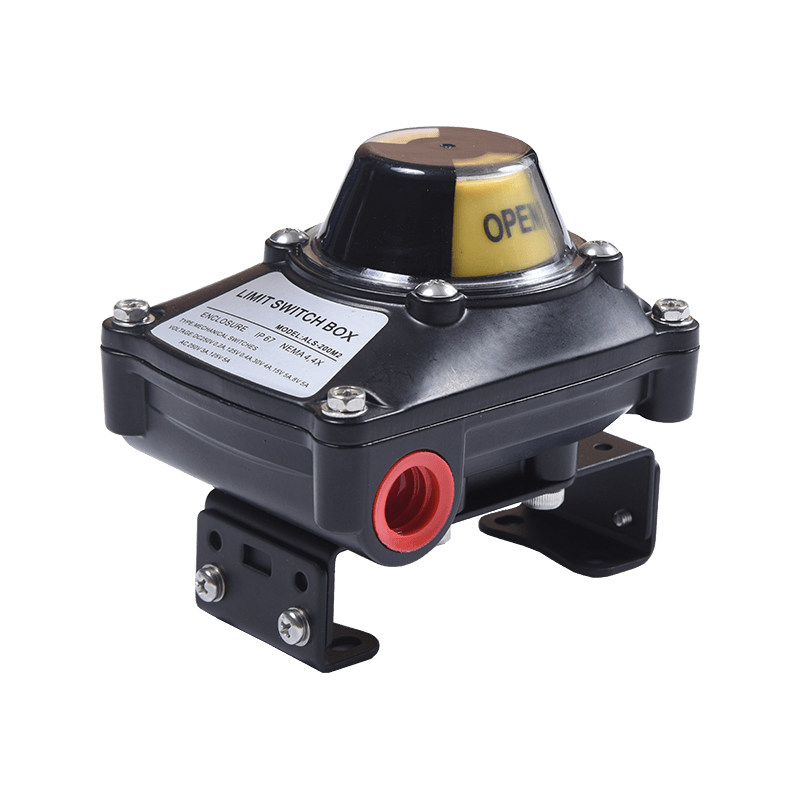 ALS Series Limit Switch for Outdoor Valve FeedbackThis compact switch offers IP67 weather-proofing in aluminum or stainless steel, making it a reliable starting point for keeping valve feedback terminals dry in rain, condensation, and washdown environments.View Product →
- Enclosure housing: the die-cast body establishes the dust-tight rating.
- Cover gasket: a static seal whose material and compression determine water tightness.
- Shaft seal: a dynamic seal that must maintain protection while the shaft turns.
- Cable gland: fitted on site, and the most common source of unplanned leaks.
Think of the enclosure as a chain of four seals, as labelled above. The housing provides the structural dust barrier; the cover gasket is a static seal that ages with heat and time; the shaft seal survives rotation and wear; the cable gland is installed by the site electrician and is the most common cause of field failures. The IP test is performed on the complete assembled enclosure, so the rating is only as strong as the weakest link.
The same reasoning applies to pneumatic actuators. A housing that keeps dust and moisture away from the piston and return spring will hold its performance longer, especially in start-stop service in dusty plants.
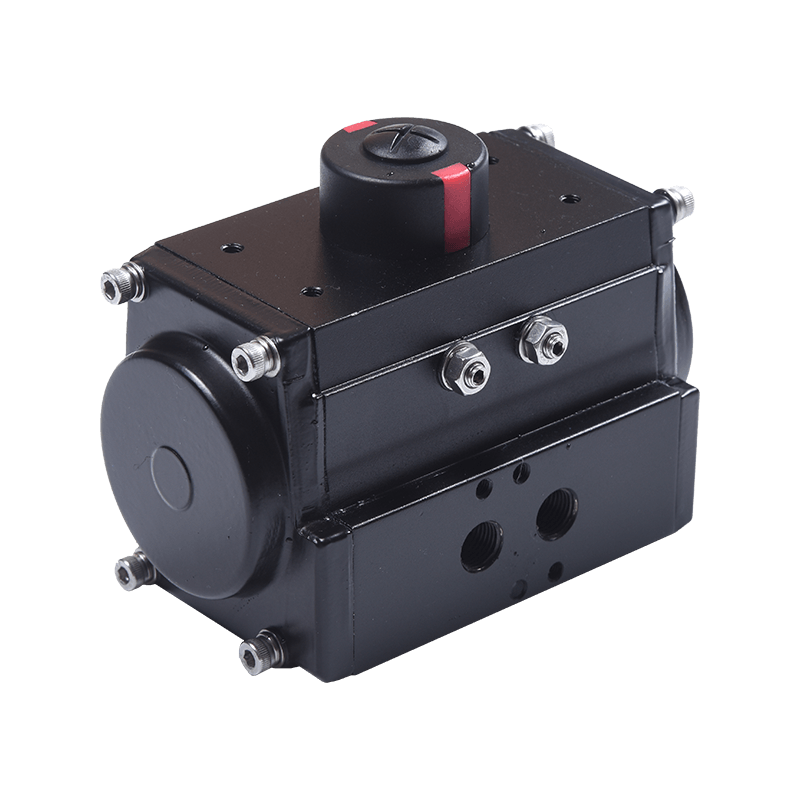 10 Series Pneumatic Actuator with Rack and PinionThis dual-piston actuator features an extruded aluminum body with corrosion protection and a honed cylinder, suited for dusty plants and start-stop service while maintaining performance and long cycle life.View Product →
A part-turn gearbox is a purely mechanical device, but its cover gaskets and input shaft seals are still specified with an IP class. Valves in floodable pits or washdown areas need gearboxes that keep water away from the lubricated gears. If you are unfamiliar with these devices, our companion article on how a part-turn gearbox works covers the operating principle in detail.
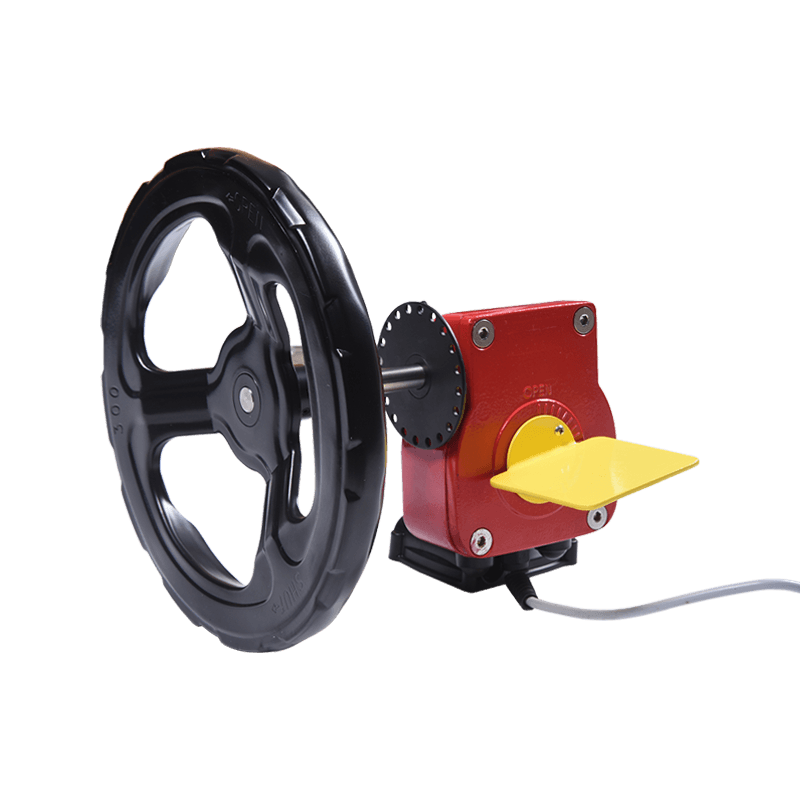 FM-series Aluminum Manual Part-Turn GearboxThis handwheel gearbox is built for firefighting and washdown areas, with sealed covers, dust-tight housing, and anti-corrosion powder coating to preserve lubrication and smooth operation.View Product →
For an accessible installation that is regularly hosed down, a manual aluminum gearbox with a sealed cover and dust-tight housing gives longer lubrication life and keeps the handwheel turning freely. The same rule repeats across the whole valve train: define the exposure, rain, jets or submersion, then choose the IP code that matches that single risk.
Common Misconceptions and Procurement Pitfalls
An IP rating is an acceptance test, not a lifetime guarantee. The IEC 60529 test is carried out on a clean, new, correctly assembled sample. Field conditions add ultraviolet light, thermal cycles, chemicals and mechanical shock, and every one of those factors can change what the seals actually deliver.
- IP68 does not mean waterproof forever. The rating is valid only for the depth and duration the manufacturer declares. Exceed that condition and the enclosure will fail like any other.
- The test certifies the complete enclosure as assembled. Change the cable gland or the connector option, and the result no longer applies to your configuration.
- IP does not cover chemical attack, ice, steam or impact. A separate IK rating covers impact, while chemical compatibility is a material selection question.
- A high IP class cannot fix poor installation. An undertorqued cover, a missing O-ring or an oversized cable entry will compromise an otherwise rated enclosure.
- An X in a code is not a typo. IPX7 means water tested and dust untested; IP6X means dust-tight and water untested. Specify both digits when the tender demands a complete rating.
Ask the supplier for the actual test certificate and check that the tested configuration matches the product you intend to buy, including glands and connectors. Ask how dynamic seals were tested as well, because the basic IEC method is largely static and a rotating shaft or moving valve stem stresses seals differently. Consistent process is what makes a rating repeatable unit after unit, which is why a manufacturer with vertically integrated production, from alloy melting to final assembly, is easier to trust on paper claims; the company profile on our about page describes that quality system.
IP Rating FAQ
What does IP stand for?
IP stands for Ingress Protection and is defined by the international standard IEC 60529. It classifies how much an enclosure protects against solid objects and water.
What is the difference between IP65 and IP67?
Both are dust-tight. IP65 resists low-pressure water jets, while IP67 also survives temporary immersion in up to 1 meter of water for 30 minutes.
What does IP68 mean?
IP68 means dust-tight and protected against continuous immersion at a depth and duration specified by the manufacturer, typically 1.5 to 3 meters for defined periods.
What does the X mean in IPX7 or IP6X?
X means that characteristic was not tested or not declared. IPX7 assures water protection only, while IP6X assures dust-tightness only.
Is IP rating relevant for indoor industrial equipment?
Yes. Indoor panels and valve accessories still face dust, condensation, washdown and accidental contact. Ratings such as IP54 or IP65 protect components from gradual contamination.
How is IP rating tested?
Tests follow IEC 60529. Dust tests run in a sealed chamber with talcum powder for up to eight hours; water tests use dripping, spraying, jetting or immersion depending on the target rating.