

 en
 English
 Español

An operator closes a 6-inch valve twice a shift to change a strainer on a cooling water header. Twenty metres downstream, a valve of the same size, pressure class and body material is trimmed to hold 60 percent flow into a heat exchanger. Swap the two valve types and one of them will be scrap within a year.
The rule behind that is short: gate valves are for isolation, globe valves are for regulation. Everything else — price, size range, body material, how the handwheel feels — sits downstream of that one decision. This guide compares the two on the points that actually drive cost: flow path, pressure drop, controllability, actuation torque and maintenance.
Content
- 1 What Each Valve Is Actually Built to Do
- 2 Pressure Drop Decides Your Pumping Bill
- 3 Gate vs Globe Valve: Side-by-Side
- 4 Flow Characteristics: Why a Gate Valve Cannot Control
- 5 Matching the Valve to the Line
- 6 The Part Buyers Forget: How the Valve Actually Gets Turned
- 7 Mistakes That Show Up in the Field
- 8 Frequently Asked Questions
- 8.1 Q1: What is the main difference between a gate valve and a globe valve?
- 8.2 Q2: Can a gate valve be used for flow control?
- 8.3 Q3: Which has lower pressure drop, a gate valve or a globe valve?
- 8.4 Q4: Is a globe valve suitable for on/off isolation?
- 8.5 Q5: Which is more expensive, a gate valve or a globe valve?
- 8.6 Q6: How do I choose between them for steam service?
What Each Valve Is Actually Built to Do
Both are multi-turn valves, so the operator turns a handwheel several times to move the disc from fully open to fully closed. How the disc moves, and where it sits when the valve is part-open, is where the two designs part company.
Gate valve: a straight bore with a sliding gate
The disc travels perpendicular to the pipe axis. Fully open, it retracts into the bonnet and leaves an almost uninterrupted passage, which is why resistance is minimal. Fully closed, it seats metal against metal or against a soft insert. There is no fine adjustment in between: crack a gate valve to 20 percent open and the disc hangs in the flow stream, vibrating against its guides and eroding the seat. Field engineers call the result wire drawing, and it is the most common way a throttled gate valve dies.
Globe valve: an S-shaped path with a plug on a seat
In a globe valve the disc travels along the flow axis and never leaves the stream. The fluid is forced up over the seat and back down again — an S-shaped detour that costs pressure but buys control. Because the plug and seat are guided closely, small changes in stem travel produce small, repeatable changes in flow. That is precisely what a control loop needs.
Pressure Drop Decides Your Pumping Bill
Piping handbooks express valve resistance as a loss coefficient, K, referenced to velocity head. Published values for a fully open valve run around 0.2 for a gate valve and roughly 6 to 10 for a straight-pattern globe valve, with angle-pattern globe valves falling between the two. The gap is not a rounding error; it is permanent head the pump has to supply every hour the line runs.
Put a price on it. At 50 litres per second, every 0.5 bar of permanent pressure loss absorbs about 2.5 kW of shaft power — roughly 21,000 kWh across a year of continuous operation. Add a second and a third throttling valve on the same header and the figure grows quickly.
One qualification: the Cv printed in a supplier catalogue is what matters, not a generic handbook figure. Trim shape, seat bore and valve size all move the real number, so confirm it before the pump curve is fixed.
Gate vs Globe Valve: Side-by-Side
The table below summarises the practical differences that decide most industrial piping selections.
| Criterion | Gate valve | Globe valve |
|---|---|---|
| Primary duty | On/off isolation | Throttling and regulation |
| Flow path | Straight through the body | S-shaped, two changes of direction |
| Pressure drop, fully open | Very low, K around 0.2 | High, K around 6 to 10 straight pattern |
| Throttling quality | Poor; seat damage when part-open | Good; stable at intermediate positions |
| Stem motion | Multi-turn, rising or non-rising | Multi-turn, rising |
| Shutoff behaviour | Reliable fully seated; metal seats can weep | Reliable; plug-seat contact tolerates throttling wear |
| Typical size range | Small bore up to very large | Small to medium bore |
| Actuation torque | Higher, rises with size and differential pressure | Generally lower than a gate valve of the same size |
| Relative cost | Lower for the same size and class | Higher |
| Typical applications | Mainline block, isolation, low-frequency operation | Flow control, bypass, sampling, vent and drain |
Flow Characteristics: Why a Gate Valve Cannot Control
Stem travel and flow do not move together, and the shape of that relationship is the reason the two designs are not interchangeable.
A gate valve has a quick-opening characteristic. Most of the flow arrives in the first quarter of the travel, then the curve flattens. An operator trying to hold 40 percent flow ends up making hairline adjustments inside a few millimetres of handwheel movement, with the disc parked in the most erosion-prone position in the body. A globe valve with linear or equal-percentage trim spreads the same adjustment across the full stroke, which is why control loops are built around globe and angle valves and why gate valves are specified as block valves only.
Matching the Valve to the Line
Where a gate valve is the right choice
- Mainline block valves on water, steam, gas and slurry headers that are normally fully open or fully closed.
- Isolation ahead of pumps, strainers, control valves and instruments.
- Long runs where pumping energy and first cost matter more than controllability.
- Lines that need a full-bore, piggable passage.
Where a globe valve earns its pressure drop
- Flow regulation on steam, condensate, cooling water and process lines.
- Bypass around regulators and control valves.
- Vent, drain and sampling points that are adjusted often.
- Small-bore lines where a few tenths of a bar of loss is affordable.
The Part Buyers Forget: How the Valve Actually Gets Turned
Specification rarely stops at the body. As bore size and differential pressure rise, seating torque climbs quickly, and a handwheel one person can turn at DN80 becomes a two-person job at DN200. Manual gate and globe valves are normally fitted with a bevel gear reducer so the operator gets torque multiplication without a long lever. Automated lines use a pneumatic or electric actuator instead, and both arrangements need position feedback so the control system knows where the valve is.
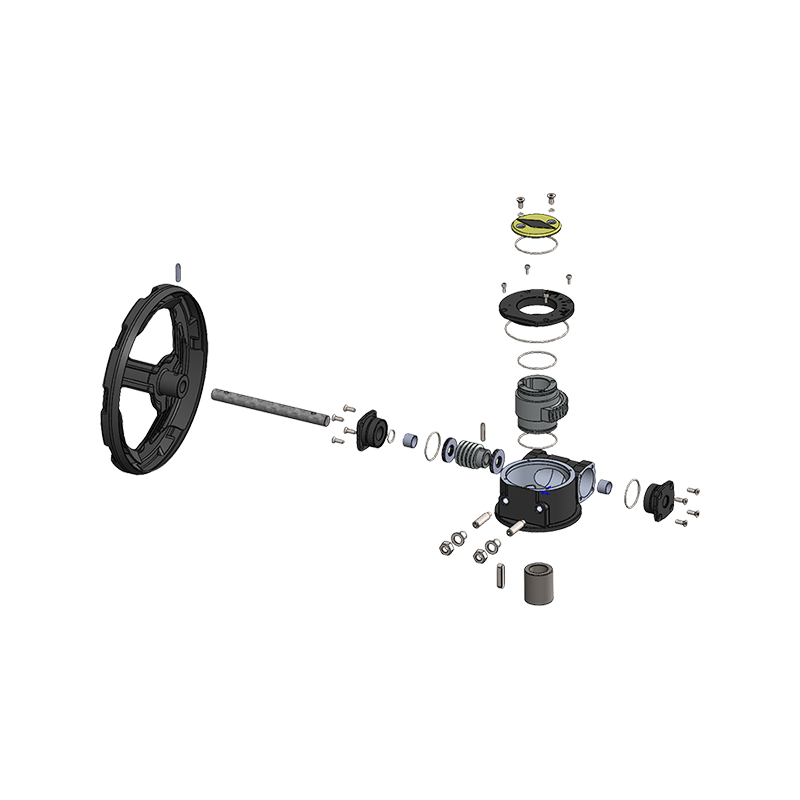 CF Series Valve Gear Reducers for Quarter-Turn ValvesAluminum alloy gear reducers multiply handwheel torque for butterfly, ball, and plug valves, with ISO 5211 mounting and optional actuators or feedback.View Product →
A valve gear reducer multiplies handwheel input into usable seating torque and keeps the operator clear of the pipe run. It is the difference between a valve that can be closed against full differential pressure and one that has to be closed with the line shut down.
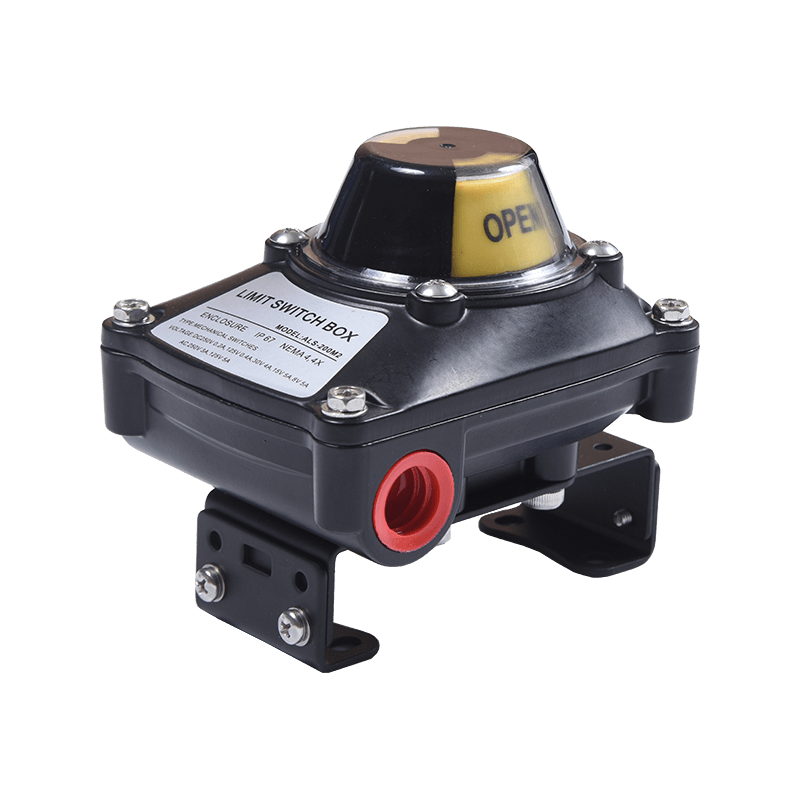 ALS Series Valve Position Limit Switch BoxesLimit switch boxes provide visual and remote valve position feedback for automated quarter-turn valves, with IP67 and hazardous-area options.View Product →
On automated valves, a limit switch reports open and closed positions back to the control room. A valve that strokes without feedback is a blind spot in the loop, and operators end up guessing during startup, batch changes and emergency shutdowns.
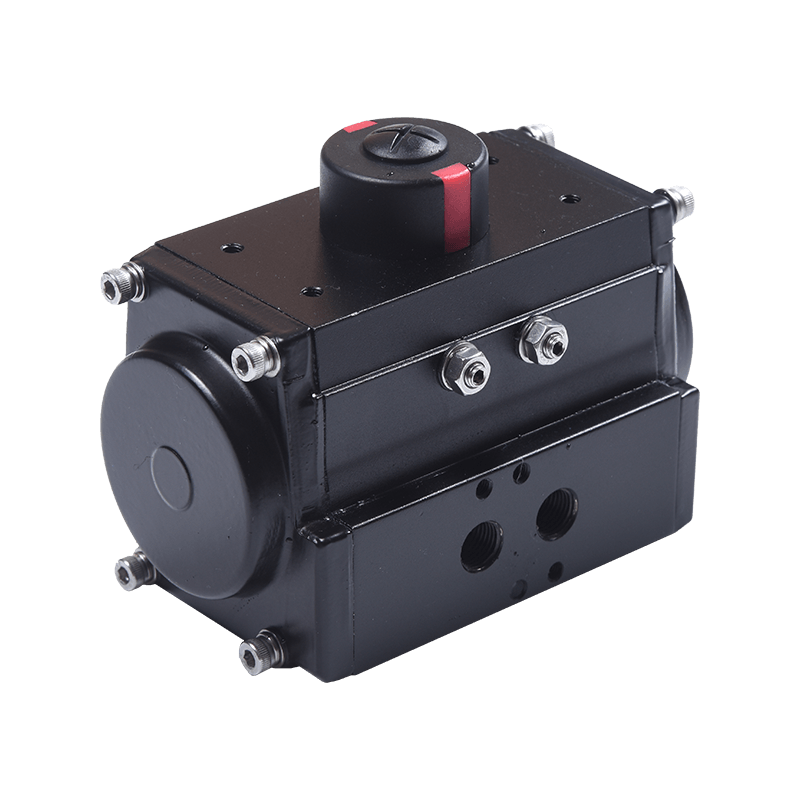 10 Series Pneumatic Actuators for Quarter-Turn ValvesDual piston rack-and-pinion pneumatic actuators provide compact quarter-turn operation and spring-return options for remote or fail-safe valve automation.View Product →
Where remote or fail-safe operation is required, a pneumatic actuator with spring return takes the decision away from the operator entirely. It also moves the torque problem from a person to an air supply, which is easier to size and easier to verify.
Quarter-turn valves follow a different logic, and butterfly valves in particular are often preferred where space and cost matter. The same torque problem appears, solved with part-turn gearboxes, and it is worth understanding the mechanism before the operator is sized — see what a part-turn gearbox does and how it works.
Sourcing body, operator and accessory from one production chain removes a familiar mismatch: a handwheel that will not fit the gearbox shaft, or an actuator flange that does not match the bonnet bolt pattern.
Mistakes That Show Up in the Field
- Throttling a gate valve because it is already installed. The valve survives for a while, then fails at the worst possible moment.
- Sizing a globe valve on line size alone. Bore is not Cv; one size down often controls better and costs less.
- Ignoring actuation torque margin. A valve that stalls at full differential pressure will not be rescued by raising the air supply.
- Leaving position feedback off automated isolation valves, which turns a controlled shutdown into guesswork.
- Mixing materials without checking the medium. Cast iron bodies and aluminium operators behave very differently in coastal, offshore and chemical service.
Frequently Asked Questions
Q1: What is the main difference between a gate valve and a globe valve?
A gate valve isolates flow through a straight-through bore and is meant to sit fully open or fully closed. A globe valve regulates flow through an S-shaped path and holds intermediate positions accurately.
Q2: Can a gate valve be used for flow control?
It can be part-open, but it should not be. Throttling exposes the disc and seat to vibration and erosion, while the quick-opening characteristic makes accurate control difficult.
Q3: Which has lower pressure drop, a gate valve or a globe valve?
A gate valve, by a wide margin. Typical loss coefficients are around 0.2 for a gate valve against 6 to 10 for a straight-pattern globe valve at full open.
Q4: Is a globe valve suitable for on/off isolation?
Yes, it shuts off reliably, but it costs more and adds permanent pressure drop. Choose it for isolation only when the same valve also has to regulate flow.
Q5: Which is more expensive, a gate valve or a globe valve?
A globe valve of the same size and pressure class is generally more expensive, because the body casting, trim and guiding are more complex to produce.
Q6: How do I choose between them for steam service?
Use gate valves for mainline block duty and globe valves for regulation, bypass and drain points. Throttling a gate valve on steam is a common cause of seat erosion.
Gate versus globe is not a debate about which valve is better. It is a question about what you are asking the valve to do. Match the duty first, size on Cv second, then work out how the valve will be turned and how its position will be confirmed. That order keeps the pump bill, the maintenance list and the shutdown schedule under control.