

 en
 English
 Español

A quarter-inch NPT air line that keeps weeping after a week in service is rarely a tape problem. More often the fitting was bottomed out in the port or stopped a turn short, so the tapered threads never reached the interference that actually does the sealing. An NPT connection does not use a gasket or an O-ring at a flat face. It seals because two tapered threads are forced into each other until the flanks press together metal to metal, and the remaining spiral path is bridged by sealant.
The short answer: NPT stands for National Pipe Thread, a 60-degree tapered thread standardized in ASME B1.20.1. It is the default pipe thread on North American valves, actuators, instruments and fittings, and it remains the port thread on most pneumatic and manual valve hardware assembled worldwide. What follows covers how the joint really seals, why a 1/4 NPT fitting does not measure a quarter inch, and where assembly practice decides whether the joint holds.
Content
- 1 What an NPT connection actually is
- 2 Why a 1/4 NPT is not a quarter inch
- 3 How an NPT joint is made up
- 4 NPT against BSPT, BSPP and NPTF
- 5 Where NPT ports appear on valve and actuator hardware
- 6 A shop-floor checklist for leak-free assembly
- 7 Failure modes worth designing out
- 8 Sourcing NPT-ported hardware with gauge-verified threads
- 9 Frequently asked questions about NPT connections
- 9.1 What does NPT stand for on a valve or actuator port?
- 9.2 Can I screw a BSP fitting into an NPT port?
- 9.3 How far should an NPT connection be tightened?
- 9.4 Does an NPT joint need PTFE tape or sealant?
- 9.5 What is the difference between NPT and NPTF?
- 9.6 Why does a 1/4 NPT fitting measure more than 1/4 inch?
What an NPT connection actually is
NPT is a tapered thread with a 60-degree included angle, cut at a taper of 1:16 on diameter, which works out to roughly 1.79 degrees per side. The crests and roots are truncated flats rather than sharp points. That flat-on-flat contact is precisely why standard NPT is not self-sealing: the crest of the male thread never bottoms in the root of the female thread, so a continuous helical gap runs from the outside of the joint to the inside.
Two mechanisms close that gap. Make-up torque forces the thread flanks of the male and female halves into contact, producing a metal-to-metal wedge along the engaged length. Sealant — PTFE tape, paste or an anaerobic resin — fills the remaining spiral channel. Take away either one and the joint leaks, no matter what the torque wrench says.
The standard defines both halves of the pair: external thread (NPT male) and internal thread (NPT female), from 1/16 through 24 inch. Assemblers who work with small fittings as a routine tend to aim for at least five fully engaged threads, because fewer turns means the load sits on too small an area to stay tight under pressure cycling and vibration.
Why a 1/4 NPT is not a quarter inch
Nominal NPT size refers to the bore of the iron pipe the thread was originally cut on, not to the thread itself. A 1/4 NPT fitting measures 0.540 in (13.7 mm) across the large end of the thread and carries 18 threads per inch. Buying by eye on the outside diameter is the quickest way to order the wrong part, and it is why so many maintenance requests arrive with a photograph and a ruler rather than a part number.
| Nominal size | Threads per inch | Outside diameter | Typical hardware |
|---|---|---|---|
| 1/8 | 27 | 10.3 mm (0.405 in) | Gauge ports, small actuator pilots |
| 1/4 | 18 | 13.7 mm (0.540 in) | Solenoid valves, actuator pilot ports |
| 3/8 | 18 | 17.1 mm (0.675 in) | Filter-regulators, mid-size cylinders |
| 1/2 | 14 | 21.3 mm (0.840 in) | Valve bodies, conduit entries |
| 3/4 | 14 | 26.7 mm (1.050 in) | Larger process valves, manifolds |
| 1 | 11.5 | 33.4 mm (1.315 in) | Main line connections |
| 1-1/4 | 11.5 | 42.2 mm (1.660 in) | Header and branch lines |
| 1-1/2 | 11.5 | 48.3 mm (1.900 in) | Process piping, strainers |
| 2 | 11.5 | 60.3 mm (2.375 in) | Large valve and pump ports |
How an NPT joint is made up
Make-up is the controlled act of turning a tapered male thread into a tapered port until the flanks interfere. Two limits matter. Too little engagement leaves the spiral gap wider than the sealant can bridge. Too much engagement wedges the thread so hard that a cast aluminium boss cracks — often a day or two after assembly rather than at the bench, once thermal cycling finishes the job.
As a working range, most 1/8 to 1/2 NPT hardware goes hand-tight plus 1.5 to 3 wrench turns. A fitting that keeps turning past that without rising resistance is usually the wrong thread standard, a damaged thread, or a port that has already been reamed out by repeated over-tightening. On aluminium actuator and gearbox bodies, follow the hardware maker's torque figure rather than feel, because thread stripping and boss cracking happen well before the joint looks tight.
NPT against BSPT, BSPP and NPTF
Thread angle and pitch are what separate the standards, and the difference is invisible on a shelf. NPT uses a 60-degree form; BSPT and BSPP use 55 degrees. At 1/8 and 1/4 the pitch differs as well, so a BSPT fitting starts into an NPT port and locks solid within a turn or two, galling both threads. From 1/2 upward the pitch happens to match, which makes the mismatch far harder to feel — and that is exactly why the small sizes are the ones that get forced.
| Thread | Angle | Form | How it seals | Where you meet it |
|---|---|---|---|---|
| NPT | 60° | Tapered 1:16 | Flank interference plus sealant | North American valves, actuators, instruments |
| NPTF | 60° | Tapered, dryseal | Crest-to-root interference, no sealant | Automotive and hydraulic dryseal joints |
| BSPT (R) | 55° | Tapered 1:16 | Flank interference plus sealant | European and Asian pipework |
| BSPP (G) | 55° | Parallel | Bonded washer or O-ring at a face | European gauge and manifold ports |
Where NPT ports appear on valve and actuator hardware
On valve and actuator hardware, NPT threads cluster in a few predictable places. Knowing which one you are looking at shortens fault-finding, because a leak at a plug or an entry gland says nothing about the valve's internal sealing.
- Pilot air ports on pneumatic actuators and solenoid valves, usually 1/8 to 3/8 NPT
- Gauge, vent and drain ports on valve bodies and part-turn gearboxes, often 1/4 or 1/2 NPT
- Conduit entries on limit switch and positioner housings, commonly 1/2 NPT
- Air preparation hardware: filters, regulators and lubricators
- Instrument and manifold take-off points on skids
Pilot ports are the most common source of slow leaks in pneumatic service, because the fitting is small, the sealant is applied quickly, and the port sits in an aluminium housing that has very little tolerance for over-tightening. Specify the port size together with the actuator's air consumption and required torque, not after the pipework is ordered.
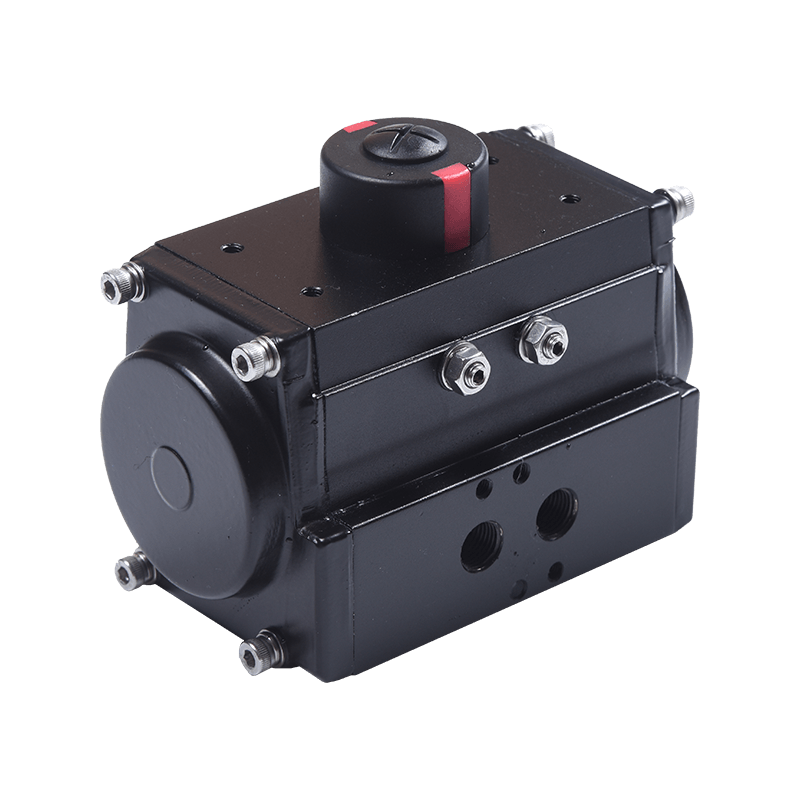 Hawks 10 Series Pneumatic Rack-and-Pinion ActuatorQuarter-turn actuator with NAMUR air and mounting interfaces, ISO5211/DIN3337 bottom mounting, and double-acting or spring-return options for valve automation.View Product →
On a part-turn gearbox, the threaded openings are usually breathers, grease points or limit-switch mounting interfaces rather than process connections. A weeping breather plug is often diagnosed as a gearbox failure when the housing itself is sound; this explanation of how a part-turn gearbox works covers which openings are meant to be sealed and which are not.
A shop-floor checklist for leak-free assembly
Most NPT failures are procedural, not dimensional. The sequence below catches the majority of them before the system is pressurised.
- Confirm the standard, not just the size — measure the outside diameter and check the pitch with a thread gauge before reaching for a wrench.
- Inspect both threads for burrs, galling or previous over-tightening; a stretched female port will never seal again.
- Clean the threads and blow out debris; PTFE shreds left in a pilot line will find the solenoid spool eventually.
- Apply sealant to the male thread only: two to three wraps of PTFE tape in the direction of tightening, or a thin bead of anaerobic sealant, leaving the first thread bare.
- Engage by hand until snug, then wrench 1.5 to 3 turns, stopping if resistance rises sharply or the fitting bottoms out.
- Pressure-test the joint before commissioning, and re-check after the first thermal cycle.
Failure modes worth designing out
Over-tightening is the leading cause of scrap on aluminium ports. An NPT fitting is a wedge, and a cast boss has a finite hoop strength; once it cracks, the housing is scrap rather than a repairable item. Cross-threading comes second, usually from starting a fitting at an angle because the pipe run is misaligned. Sealant-related failures are third: too little tape and the helix stays open, too much and the tape migrates downstream into valves and instruments.
Electrical enclosures deserve a separate mention. Moisture inside a limit switch housing usually enters through an under-tightened 1/2 NPT conduit entry or an entry fitted without a sealing gland, not through the switch body itself.
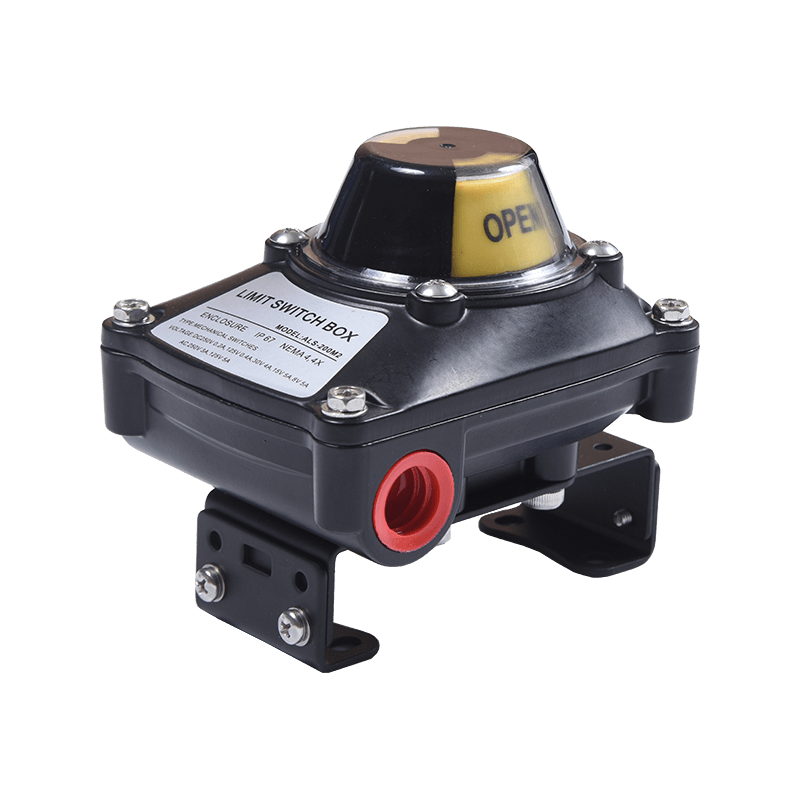 ALS Series Valve Position Limit SwitchCompact IP67 limit switch for valve position feedback in weatherproof and hazardous areas, with dual cable entries and mechanical, inductive or magnetic sensor options.View Product →
Sourcing NPT-ported hardware with gauge-verified threads
Thread quality is a manufacturing question, not an assembly one. A port that is tapped with a worn tool will pass a visual check and still leak, so buyers should ask how the thread is verified rather than whether it is inspected. L1 plug and ring gauges, applied at a defined frequency during production, show whether the effective thread length sits inside the tolerance band that ASME B1.20.1 allows; go/no-go gauges on the shop floor and a documented sampling plan are the practical evidence.
For cast aluminium components, wall thickness around the boss matters as much as the thread itself. Under-tightened joints leak, over-tightened joints crack, and both outcomes trace back to how much material and draft the casting design left around the port. A supplier that controls melting, casting, machining and final inspection under one roof can correct the boss geometry before the tooling is cut rather than after the first rejected lot.
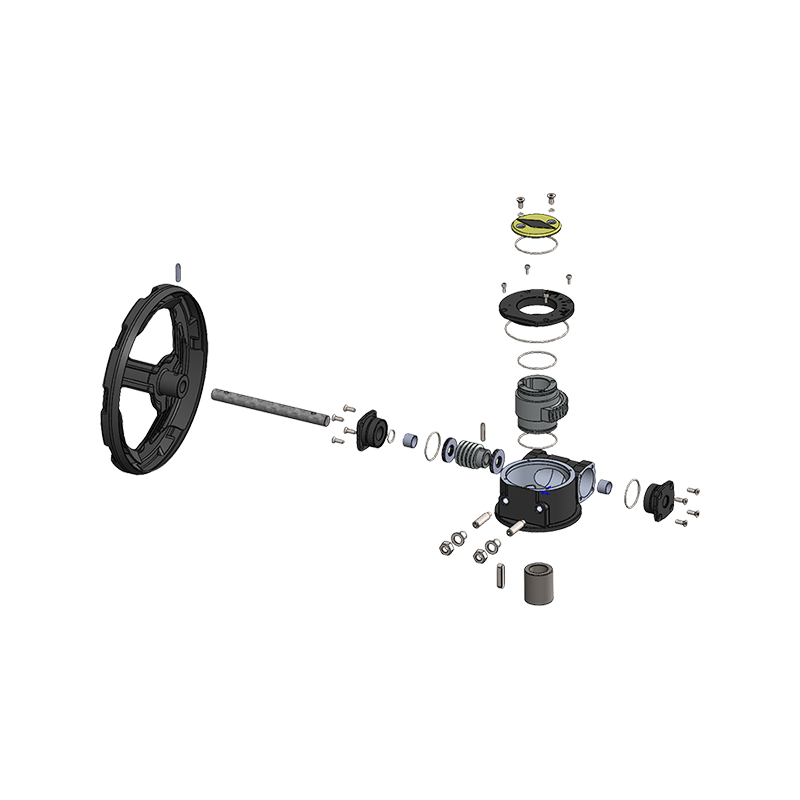 CF Series Aluminum Quarter-Turn Valve Gear ReducersAluminum alloy gearboxes for butterfly, ball and plug valves, with corrosion-resistant coating, needle roller bearings, ISO5211 mounting and models up to 5500 Nm.View Product →
Ningbo Hawks Auto Parts produces aluminium and cast iron valve drive components — hand levers, manual and declutch part-turn gearboxes, pneumatic actuators and gearbox accessories — for OEM programmes where port threads, torque capacity and sealing are specified together. The company profile outlines the in-house casting, machining, heat treatment and inspection flow that sits behind those parts.
Frequently asked questions about NPT connections
What does NPT stand for on a valve or actuator port?
National Pipe Thread, a 60-degree tapered pipe thread defined in ASME B1.20.1. On pneumatic actuators, solenoid valves and gearboxes it is the standard port thread for pilot air, gauges and breather plugs.
Can I screw a BSP fitting into an NPT port?
Not safely. The thread angles differ (55° vs 60°), and at 1/8 and 1/4 the pitch differs too, so the fitting jams within a turn or two and damages both threads. From 1/2 upward the pitch matches and the mismatch is much harder to detect by feel.
How far should an NPT connection be tightened?
Hand-tight, then 1.5 to 3 wrench turns for most 1/8 to 1/2 NPT hardware, within the manufacturer's torque figure. Stop immediately if resistance rises sharply or the fitting bottoms out in the port.
Does an NPT joint need PTFE tape or sealant?
Yes. Standard NPT threads are not self-sealing because the crest never bottoms in the root, leaving a helical leak path. Use two to three wraps of tape in the tightening direction, or a liquid sealant, on the male thread only. NPTF dryseal threads are the exception.
What is the difference between NPT and NPTF?
NPTF is the dryseal version covered by ASME B1.20.3, with crest and root dimensions controlled so the threads interfere and seal without sealant. The two look almost identical on a shelf and are frequently mixed up in maintenance stores.
Why does a 1/4 NPT fitting measure more than 1/4 inch?
The nominal size refers to the bore of the historic iron pipe, not the thread. A 1/4 NPT thread measures 0.540 in (13.7 mm) across the large end and has 18 threads per inch, so always size by the standard and the thread count.