

 en
 English
 Español

Pneumatically actuated butterfly valves are chosen for one reason above all: a quarter turn of the disc can be repeated quickly, remotely, and with a compact footprint. The catch is that the actuator is only as good as the torque margin behind it. In most field problems, the valve is not the weak point; the sizing assumptions are. A soft-seated valve that cycles easily at a healthy air pressure may hesitate when the supply sags, especially after the seat has swelled or the line has picked up debris. The practical answer is to size from breakaway torque, confirm the air supply at the actuator port, and lock down the mounting interface before comparing catalog models.
Content
- 1 The First Decision Is Torque, Not the Actuator Model
- 2 How Pneumatically Actuated Butterfly Valves Work
- 3 Sizing Air Supply, Actuator, and Mounting
- 4 Where They Fit, and Where They Do Not
- 5 Reliability Details That Decide Uptime
- 6 A Procurement Checklist for OEM Projects
- 7 Frequently Asked Questions
- 7.1 Q1. What is a pneumatically actuated butterfly valve used for?
- 7.2 Q2. How do I calculate the torque for a pneumatic butterfly valve?
- 7.3 Q3. What air pressure does a pneumatic butterfly valve need?
- 7.4 Q4. What is the difference between double-acting and spring-return?
- 7.5 Q5. Why does my pneumatic butterfly valve not open fully?
- 7.6 Q6. Do I need a limit switch on a pneumatic butterfly valve?
The First Decision Is Torque, Not the Actuator Model
A butterfly valve does not demand the same torque through the whole stroke. Breakaway torque, the effort needed to lift the disc off the seat, usually governs actuator selection. Running torque may be lower, but it still matters for stable movement and final seating. That is why a proper pneumatic actuator sizing calculation starts with the valve maker's torque curve at the worst expected differential pressure, not with a rule of thumb based on line size.
Two procurement risks appear again and again. The first is using a water torque figure for a dry or sticky service. The second is checking only the double-acting actuator and assuming the spring-return version will behave the same. In a spring-return unit, the air supply must overcome both valve torque and spring torque through the stroke, and the available margin is smallest at the minimum shop-air pressure. Industry actuator sizing guidance treats worst-case breakaway torque as the basis, then applies a safety factor agreed with the valve manufacturer.
The chart is not a substitute for a torque curve, but it is a useful agenda for the first technical meeting. If the breakaway figure and the spring-return condition are clear, the rest of the actuator selection becomes much less speculative.
How Pneumatically Actuated Butterfly Valves Work
Compressed air enters a piston or diaphragm chamber and produces a linear force. A rack-and-pinion or scotch-yoke mechanism converts that force into a 90-degree rotation of the valve stem. The disc turns, the flow area changes, and the seat either seals or opens the path. The actuator does not open the valve in isolation; it converts air pressure into torque, and the valve converts that torque into flow control. If the torque demand exceeds the available actuator torque at the real supply pressure, the disc may stop short, hunt, or fail to seat.
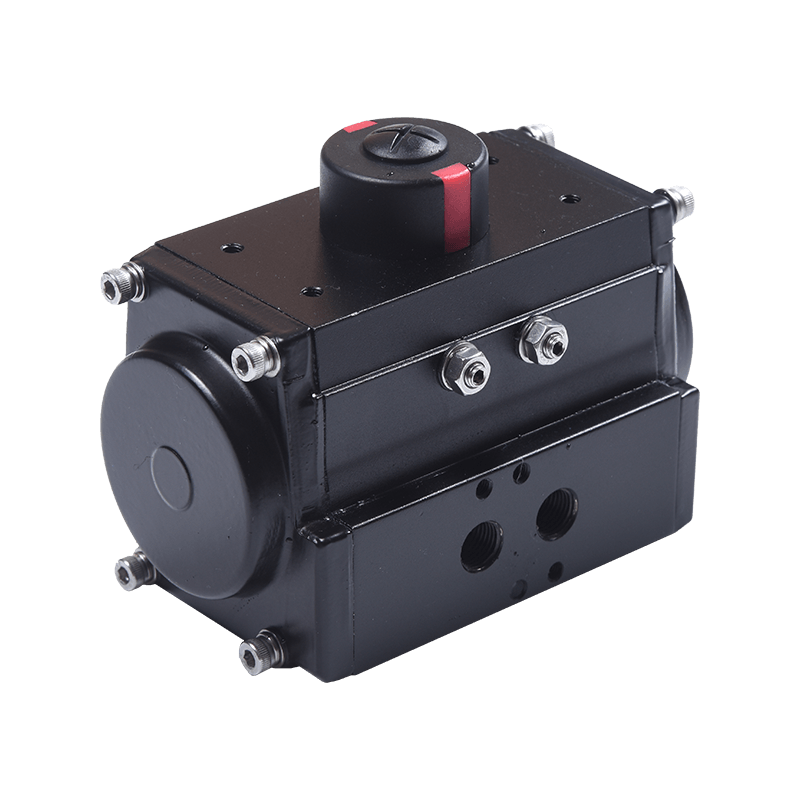 Hawks 10 Series Pneumatic Rack-and-Pinion ActuatorOffers ISO5211, DIN3337 and NAMUR mounting with double-acting or spring-return options, helping match actuator torque to compact OEM valve interfaces.View Product →
For OEM projects, the mounting pattern, stem square, and actuator height matter as much as the torque rating. A compact actuator with a standard interface reduces adapter stacks and makes later service simpler. It also keeps the solenoid, limit switch, and air ports accessible when the valve is installed close to a wall or inside a skid.
Sizing Air Supply, Actuator, and Mounting
A compressor header is not the same as pressure at the actuator during a demand cycle. A receiver gauge can look healthy while the actuator sees a lower pressure because of filter drop, tubing length, solenoid restriction, or simultaneous demand from other valves. Check the minimum dynamic pressure at the actuator inlet, not only the static pressure at the regulator. For spring-return units, confirm the available torque at that minimum pressure through the full stroke.
| Check | Why it matters | What to confirm |
|---|---|---|
| Breakaway torque | Sets the starting margin | Worst differential pressure and seat condition |
| Air pressure | Available torque falls with supply pressure | Minimum pressure at the actuator inlet |
| Action mode | Spring-return must overcome valve and spring torque | Fail position and minimum air pressure |
| Mounting | Mismatch adds adapters and lost travel | ISO 5211 pattern, stem square, and height |
| Feedback | The control system needs proof of position | Limit switch type and NAMUR interface |
| Environment | Water, dust, and temperature affect reliability | IP rating, body material, and exhaust protection |
When the valve is part of a wider skid, review the automated valve control systems as a whole: air preparation, solenoid voltage, feedback wiring, and the control sequence. A valve that is correctly sized in isolation can still perform poorly if the solenoid is undersized or the exhaust is restricted.
Where They Fit, and Where They Do Not
Pneumatically actuated butterfly valves are a strong fit for fast isolation and reasonably clean service. They are common in water and wastewater lines, HVAC, general industrial fluid handling, and skids that already have filtered air and a PLC signal. The compact face-to-face dimension and quarter-turn action make them easier to package than many other automated valve types.
- Clean water and wastewater isolation where fast 90-degree cycling matters.
- HVAC and general industrial lines with a clean, low-to-moderate pressure drop.
- Skids with dry, filtered air and a control system ready for limit-switch feedback.
They are not a universal answer. A soft-seated concentric valve is usually the economical choice for lower pressure, while double-offset and triple-offset designs move into higher pressure or temperature duty. If the line carries abrasive slurry, or the valve must hold tight shutoff after many cycles, confirm seat material, test standard, and actuator margin rather than assuming a standard catalog seat will do. High pressure drop and cavitating service also deserve a separate review, because the disc and seat see operating conditions that a simple on/off rating does not capture.
Reliability Details That Decide Uptime
Position feedback is not a luxury. A limit switch or position indicator tells the PLC that the disc has reached open or closed. Without it, the control sequence relies on a timer, which can hide partial travel, a soft seat, or a dropping air supply. For critical isolation, the feedback should match the actual stem position, not only the solenoid command.
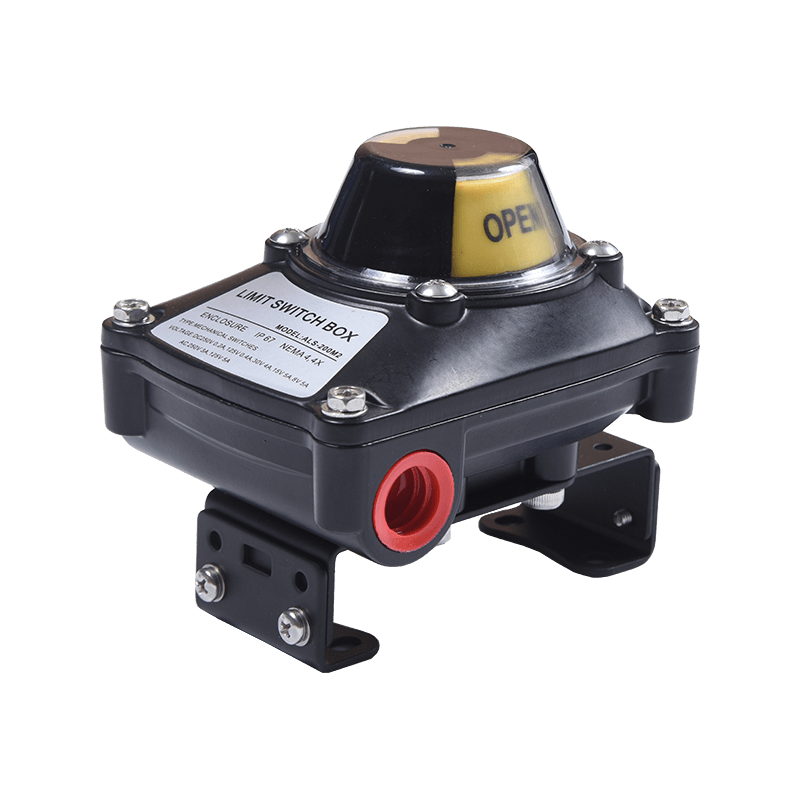 ALS Series Valve Position Limit SwitchProvides IP67 valve-position feedback with hazardous-area certifications, visual indication and mechanical, inductive or magnetic sensor options for actuator monitoring.View Product →
Air quality is the other quiet failure path. Water and particulate in the air line can damage seals, stick a spool, or slow exhaust. A filter-regulator close to the valve, correct tubing size, and a planned drain check are basic protections. Follow the actuator maker's lubrication guidance; do not add oil unless it is specified, because the wrong oil can wash out the factory grease. Exhaust silencers and check valves should also be inspected, since a clogged exhaust can make a healthy actuator appear weak.
A Procurement Checklist for OEM Projects
Before a project moves to casting or machining, lock the interface and the torque basis. Ask for the valve torque curve, the actuator torque curve at the actual minimum air pressure, the spring-return condition, the fail position, and the mounting drawing. Confirm the ISO 5211 pattern, stem dimensions, and accessory envelope. A small mismatch discovered after the body is machined becomes an expensive adapter problem.
- Define worst-case differential pressure and media condition.
- Confirm double-acting or spring-return action and fail position.
- Verify minimum air pressure at the actuator, not at the compressor.
- Check mounting, stem, and accessory clearance before release.
- Agree on test reports, marking, and spare-part support.
If maintenance needs manual operation, specify the override at the same time as the actuator. A declutch gearbox lets the operator take over without removing the actuator or breaking the air connection, but it changes the mounting stack and must be planned early.
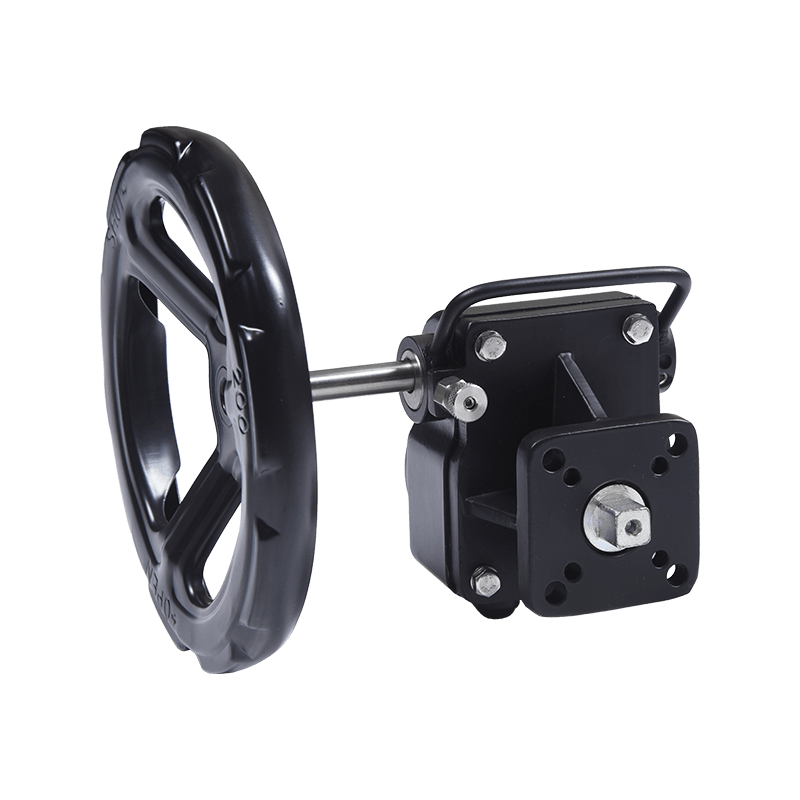 GD-Series Aluminum Declutch Part-Turn GearboxAdds manual override for butterfly, ball and plug valves on pneumatic actuators, with ISO5211 mounting and 180–5500 N·m output torque.View Product →
The best procurement conversation is therefore short and specific: torque at the worst condition, air pressure at the inlet, interface dimensions, and feedback method. That set of facts protects both the valve performance and the project schedule.
Frequently Asked Questions
Q1. What is a pneumatically actuated butterfly valve used for?
It is used for fast on/off or modulated flow control in water, HVAC, and general industrial lines. A pneumatic actuator converts compressed air into a quarter-turn movement, so the valve can be controlled remotely or by a PLC.
Q2. How do I calculate the torque for a pneumatic butterfly valve?
Start with the valve maker's breakaway torque at the worst differential pressure, then add the agreed safety factor and, for spring-return units, the spring torque through the stroke. Compare that result with actuator torque at the minimum air pressure at the inlet.
Q3. What air pressure does a pneumatic butterfly valve need?
The required pressure depends on actuator size, valve torque, and action mode. Confirm the minimum dynamic pressure at the actuator during simultaneous demand, not only the pressure at the receiver or regulator.
Q4. What is the difference between double-acting and spring-return?
A double-acting actuator uses air for both opening and closing. A spring-return actuator uses air one way and a spring for the fail position, so its available torque must overcome both valve torque and spring torque at the minimum supply pressure.
Q5. Why does my pneumatic butterfly valve not open fully?
Common causes include low air pressure at the actuator, undersized tubing or solenoid, a sticking valve seat, incorrect torque sizing, or a mechanical stop set too early. Check pressure at the actuator port first, then verify stroke and feedback alignment.
Q6. Do I need a limit switch on a pneumatic butterfly valve?
For critical isolation or control sequences, yes. A limit switch gives the PLC proof that the disc has reached position, instead of relying on a timer. It also helps maintenance detect partial travel, seat wear, or a dropping air supply.